
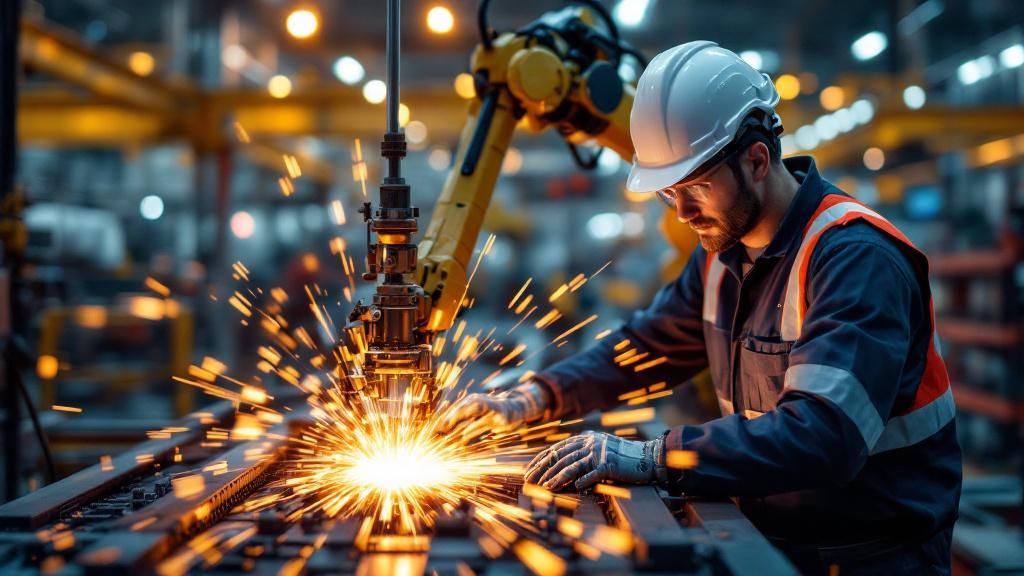
The UK manufacturing industry is witnessing an unprecedented transformation as manufacturing executives pledge record-breaking investments in advanced automation systems and comprehensive workforce development programmes. This deliberate repositioning demonstrates manufacturers’ determination to improve output, remain globally competitive, and ensure sustainable growth. Our investigation reveals the significant capital investments driving this industrial revolution, explores the cutting-edge solutions transforming factory floors, and examines how manufacturers are preparing their employees for tomorrow’s demands. Discover what this capital influx means for manufacturing’s long-term direction.
Investment Surge in Automation Technology
The UK production sector has seen an substantial financial dedication towards automation solutions, with capital attaining record highs in the past few years. Key manufacturing firms across the automotive, aerospace, and electronics industries are investing considerable resources towards automation robots, AI technology, and cutting-edge production methods. This spending increase reflects industry confidence in automation’s potential to boost operational performance, lower manufacturing expenses, and elevate product quality standards. The magnitude of this dedication underscores manufacturers’ recognition that technological innovation is essential for preserving market competitiveness in an increasingly globalised marketplace.
Industry specialists link this funding surge to various overlapping factors, including post-pandemic distribution network evaluation, rising labour costs, and the critical requirement for enhanced production flexibility. Companies are prioritising automation technologies that provide adaptability and growth capacity, enabling quick response to fluctuating market demands. Investment data demonstrate that manufacturers are doing far more than updating manual operations but comprehensively restructuring production methodologies. This planned method secures that British manufacturing remains at the forefront of industrial innovation, positioning the sector for enduring development and enhanced resilience against forthcoming financial volatility.
Strategic Workforce Development Initiatives
Recognising that technological advancement alone cannot drive success, UK manufacturers are committing significant resources in comprehensive workforce development programmes. These initiatives represent a fundamental shift in how the industry invests in human capital. By coupling automation investments with comprehensive training programmes, manufacturers are confirming their workforce can successfully run, service, and enhance new technologies. This integrated methodology addresses skills gaps whilst building employee confidence and engagement in an increasingly automated environment.
Professional Development Programmes
Leading manufacturers have established custom training centres and apprenticeship programmes designed to equip workers with essential digital and technical competencies. These schemes encompass robotics operation, data analysis, information security, and advanced programming languages. Investment in classroom-based and digital learning solutions guarantees accessibility across all workforce levels. Companies are partnering with learning organisations to offer credentials acknowledged industry-wide, improving career progression opportunities and employee retention rates significantly.
The financial commitment to skills training extends beyond first-stage induction, with companies establishing continuous professional development programmes. Workers receive frequent development options to adapt to changing technology contexts and emerging industry requirements. Many companies provide training subsidies, mentoring schemes, and sabbatical leave for further education. This sustained investment demonstrates organisations’ commitment to creating long-term professional routes and fostering a ethos of ongoing education within their companies.
Partnership with Learning Establishments
UK manufacturers are forging strategic partnerships with universities and further education colleges to align curriculum development with industry requirements. These partnerships ensure school leavers have practical skills immediately applicable to modern manufacturing environments. Collaborative initiatives include curriculum design, guest lecturing, lab facilities, and resource supply. By working closely with educational institutions, manufacturers shape the flow of skilled workers joining the sector, addressing anticipated skills shortages in advance.
Additionally, manufacturers fund research programmes and innovation centres within universities, encouraging knowledge sharing and technological development. Combined-degree programmes and industry placements provide students with crucial practical experience whilst offering companies priority access to new talent. These partnerships reinforce the UK’s standing as a worldwide manufacturing centre, maintaining long-term competitiveness and positioning Britain as an attractive destination for high-tech manufacturing investment and skilled workforce development.
Economic Impact and Future Outlook
The record funding for automation and workforce training is forecast to create significant economic advantages across the UK manufacturing sector. Market experts forecast output increases of up to 25% within the next three years, translating to increased output and enhanced competitiveness in worldwide markets. These improvements are expected to create approximately 15,000 fresh skilled manufacturing roles whilst bolstering Britain’s standing as a tech-focused industrial centre. The multiplier effect of this funding will probably stimulate growth throughout distribution networks and allied industries.
Long-term prospects for UK manufacturing appear decidedly encouraging as businesses secure their footing at the leading edge of Industry 4.0 adoption. Companies committing to automation today are preparing themselves to unlock new market possibilities and react quickly to changing customer needs. The incorporation of artificial intelligence, robotics, and advanced analytics promises to release creative capacity previously constrained by labour availability and operational limitations. Progressive manufacturers recognise that lasting competitive advantage depends upon ongoing technological development and staff capability building.
Looking forward, the momentum generated by present investment movements indicates a fundamental reshaping of UK manufacturing’s economic contribution. Government support through skills investment and commercial incentives will potentially increase uptake among SMEs. As automation matures and worker capabilities increase, UK manufacturers are well-positioned to reclaim market share from global rivals. This shift embodies not just industrial upgrade but a strategic repositioning of the manufacturing sector as a pillar of Britain’s future economic prosperity and technological advancement.
