
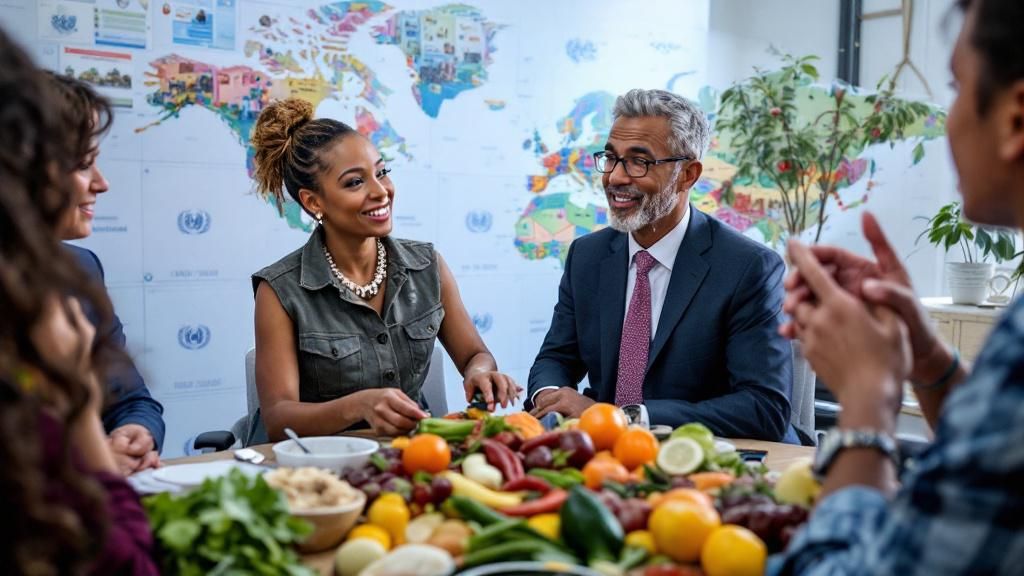
The United Nations has launched an ambitious new initiative created to combat the ongoing worldwide challenges of poverty and hunger that continue to afflict millions worldwide. This comprehensive programme constitutes a pivotal moment in global progress, combining novel approaches, significant funding pledges, and joint action from member states to produce enduring transformation. The initiative tackles underlying factors whilst delivering short-term support, promising to reshape how the world at large tackles these linked issues. Learn how this innovative strategy seeks to revolutionise lives and build a more equitable future.
Global Action on Poverty Crisis
The United Nations’ latest programme constitutes a turning point in the worldwide fight against hunger and poverty. By deploying funds across several continents and engaging both developed and developing nations, the UN seeks to establish a unified approach that transcends traditional boundaries. This collaborative approach recognises that poverty and hunger are interconnected challenges requiring coordinated effort. The programme unites national governments, NGOs, and commercial partners to guarantee comprehensive coverage and lasting results across disadvantaged areas.
Member states have made a commitment to unprecedented levels of collaborative work, committing financial support and specialist knowledge to enhance current initiatives. The initiative highlights transparency and accountability, setting clear metrics to track progress and impact. By utilising existing infrastructure and expanding on proven regional approaches, the UN aims to improve efficiency and minimise duplication of efforts. This strategic alignment guarantees that resources reach those with greatest need whilst creating robust frameworks able to managing future crises effectively.
Rapid Action Frameworks
The initiative’s opening phase focuses on urgent assistance and quick response in areas facing severe food shortages and acute hardship. Emergency food supplies, healthcare support, and provisional accommodation initiatives are being distributed to vulnerable areas over the following weeks. The UN has established swift-response groups equipped with capability to evaluate on-site situations and tailor interventions accordingly. These critical steps aim to save lives whilst enduring approaches are being implemented, confirming exposed groups obtain vital assistance swiftly.
Financial funding channels have been simplified to speed up aid delivery to organisations on the ground working within affected areas. Local community partners and leaders are being empowered to determine priority needs and allocate funds in a streamlined manner. Training programmes for those delivering assistance ensure that assistance reaches target recipients whilst preserving cultural respect and dignity. These immediate actions serve as a connection between immediate crisis management and long-term development, providing breathing space for communities to become more stable and start rebuilding.
Long-Term Strategic Objectives
The initiative creates far-reaching objectives for tackling poverty and food security improvement over the coming decade. Strategic investments in agricultural systems, educational provision, and medical infrastructure aim to tackle root causes of poverty rather than just managing immediate problems. The UN has pledged to assist small-scale farmers through knowledge transfer and market linkage initiatives, enabling them to increase productivity sustainably. These foundational investments build pathways for societies to attain economic independence and economic self-reliance whilst safeguarding the environment.
Extended success demands organisational reinforcement and capacity building within national governments and local organisations. The programme prioritises workforce training, administrative enhancements, and economic diversification to create robust economic systems equipped to withstand future shocks. By fostering entrepreneurship and advancing equitable development, the initiative aims to produce lasting job prospects. These strategic investments represent a significant transformation towards empowering communities to shape their future direction, guaranteeing lasting transformation beyond the programme’s scheduled duration.
Deployment and Collaborative Framework
The UN’s scheme works within a multi-tiered implementation strategy that brings together governments, independent organisations, and private sector stakeholders. By establishing coordination offices throughout Africa, Asia, and Latin America, the programme guarantees culturally appropriate responses that tackle specific circumstances. This decentralised approach enables swift action capacity whilst maintaining monitoring from UN headquarters. Collaborations with multilateral financial institutions provide vital financial mechanisms, enabling sustainable infrastructure initiatives that create employment opportunities and strengthen food security frameworks across disadvantaged communities.
Success is contingent upon real cooperation between developed and developing nations, with transparent accountability mechanisms securing resources get to intended beneficiaries. The framework encompasses capability enhancement schemes that bolster local institutions and enable communities to become self-reliant. Regular monitoring through external reviews and local input mechanisms maintains programme integrity and effectiveness. By cultivating sustained relationships rather than temporary aid arrangements, the UN initiative aims to create structural transformation that interrupts cycles of poverty and hunger, ultimately creating strong nations capable of sustainable development.
